

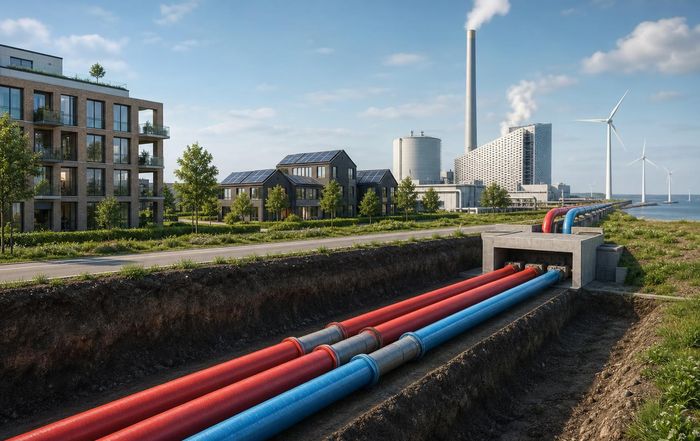
How Denmark's District Heating Model Is Creating Global Business Openings
Denmark's approach to heating buildings has quietly become one of the most-watched energy transitions in the world. While many countries still rely heavily on individual gas boilers or electric heaters, Denmark has built an extensive, increasingly low-carbon district heating network that now supplies around two-thirds of all Danish households. That system is not just a climate story. It is also generating a wave of commercial opportunities in engineering, finance, technology, and services far beyond Denmark's borders, as cities and utilities from Europe to Asia look for scalable ways to decarbonize heat.
For business leaders, investors, and policymakers focused on energy, infrastructure, and climate-aligned growth, Denmark's district heating model offers a living blueprint: a combination of regulation, cooperative ownership, digitalization, and technology integration that is spawning new markets for hardware, software, and services. Understanding how this model works, and where it is headed, helps clarify where the next openings are likely to emerge.
What Makes Denmark's District Heating Model Distinct
District heating itself is not new: hot water or steam is generated centrally and distributed through insulated pipes to buildings, which use heat exchangers instead of individual boilers. What sets Denmark apart is how systematically it has built and governed this infrastructure, and how that governance is now shaping a commercial ecosystem.
Following the 1970s oil crises, Denmark introduced policies to reduce dependence on imported fossil fuels, gradually expanding district heating in dense urban and suburban areas. Today, according to the Danish Energy Agency and the International Energy Agency (IEA), district heating supplies roughly 65% of Danish households, with coverage in cities such as Copenhagen close to universal. The system is guided by a "heat planning" framework, where municipalities designate zones for district heating or individual solutions, reducing duplication and stranded assets.
Another defining feature is the non-profit principle. Most Danish district heating companies are either consumer-owned cooperatives or municipally owned utilities, legally required to operate on a cost-price basis. This has not prevented commercial activity; instead, it has concentrated returns in upstream and adjacent markets: technology providers, engineering firms, EPC contractors, data and software vendors, and financiers. In other words, the network itself is run as essential infrastructure, while private companies compete to supply the components and services that keep it efficient and low-carbon.
As countries pursue their own energy transitions, this combination of planning, governance, and open supplier markets is attracting attention from international institutions such as the World Bank and the European Commission, both of which have highlighted district heating as a key lever for decarbonizing urban heat. That interest is translating into concrete commercial demand for expertise and technology derived from the Danish experience.
From Fossil CHP to Low-Carbon Heat: A Moving Market
Denmark's district heating network has evolved through several technological phases, and each stage has opened different kinds of business opportunities. Initially, much of the heat came from combined heat and power (CHP) plants burning coal, oil, and later natural gas. Over time, policy incentives and carbon pricing pushed utilities to switch to biomass, waste-to-energy, and industrial surplus heat. Today, the system is shifting again, toward large-scale heat pumps, solar thermal, geothermal, and seasonal heat storage.
This evolution is driven by climate targets and EU-wide policies. Denmark aims for climate neutrality by 2045, and the EU's Fit for 55 and REPowerEU packages are accelerating the phase-out of fossil fuels in buildings. The European Commission and IEA both identify district heating as a central pathway to meet those goals in dense urban areas, given the difficulty of electrifying every individual building quickly and affordably.
The current wave of investment is therefore focused on decarbonizing existing networks and expanding low-temperature "4th generation" district heating systems. These operate at lower supply temperatures, which reduces heat losses and makes it easier to integrate renewable and waste heat sources. For businesses, this transition is creating demand in several areas: retrofitting older high-temperature networks, installing large heat pumps and thermal storage, digitalizing control systems, and upgrading building-side installations.
For international readers interested in broader energy and economy trends, this is a classic example of how regulatory shifts can reconfigure value chains. While end-user heating prices are regulated and non-profit in Denmark, the underlying technology markets are increasingly competitive and export-oriented, with Danish and international firms supplying projects across Europe and beyond.
Hardware and Infrastructure: A Growing Export Platform
One of the most visible business openings linked to Denmark's model is in physical infrastructure: pipes, valves, substations, heat exchangers, and large-scale generation and storage assets. Danish-based companies such as Danfoss, Logstor (now part of Kingspan), and Grundfos have built global businesses around district heating and energy-efficient building systems, leveraging the domestic market as a testbed.
The demand for high-performance pre-insulated pipes, efficient substations, and smart components is rising as more cities consider district heating as part of their sustainable energy strategies. Markets in Germany, the United Kingdom, the Netherlands, and parts of Eastern Europe have announced or expanded district heating plans, often referencing Danish experience and, in some cases, partnering directly with Danish firms or consultants. For readers tracking global infrastructure trends, this reflects a broader pattern: small countries with deep domain expertise turning domestic policy into exportable industrial niches.
Beyond components, there is a growing market for turnkey project delivery. Engineering, procurement, and construction (EPC) companies with experience in complex district heating systems-especially those integrating multiple heat sources-are in demand. International development institutions such as the European Investment Bank and EBRD have financed district heating modernization projects in Central and Eastern Europe, often requiring best-practice designs and efficiency standards similar to those used in Denmark.
These infrastructure markets connect naturally with broader business and markets coverage, as they involve long-term regulated assets, cross-border supply chains, and evolving regulatory frameworks. Investors focused on energy infrastructure funds are increasingly considering district heating as a niche within the wider energy transition, particularly where policy frameworks resemble the Danish model.
Readers interested in linked themes can also explore our coverage of global energy shifts and markets dynamics.
Digitalization and AI: Turning Heat Networks into Data Businesses
Perhaps the most dynamic commercial frontier in Denmark's district heating ecosystem lies in software and data. Modern district heating systems are effectively large, distributed thermal networks whose performance depends on precise control of flows, temperatures, and demand. As utilities roll out smart meters and sensors, they are generating vast datasets that can be used to optimize operations, reduce losses, and integrate variable renewable sources.
Danish utilities and technology companies have been early adopters of advanced control strategies, including weather-compensated supply temperatures, demand forecasting, and predictive maintenance. Increasingly, these tools are being enhanced with AI and machine learning, creating openings for software vendors, analytics providers, and startups.
Several Danish and Nordic utilities have piloted AI-based control systems that adjust supply temperatures in real time based on weather forecasts, historical consumption patterns, and grid conditions. This can significantly reduce heat losses and operational costs. Research institutions such as the Technical University of Denmark (DTU) and innovation platforms like Innovation Fund Denmark (Danish-language site) have supported projects focused on digital twins, model-predictive control, and integrated energy systems, often with commercial partners.
For technology-oriented readers, this aligns closely with broader trends in AI and technology: physical infrastructure becoming "software-defined" through layers of optimization and automation. International vendors-from large industrial players like Siemens and Schneider Electric to specialized startups-are competing to supply SCADA systems, cloud-based optimization platforms, and building-level control solutions.
These digital capabilities are exportable. Cities and utilities outside Denmark often seek not just hardware, but also operational models: how to run a network efficiently, how to price heat, how to engage consumers, and how to integrate data flows from buildings, weather services, and power markets. This creates consulting and licensing opportunities for companies that can package Danish-inspired operational know-how into replicable offerings.
Readers following our technology and ai coverage will recognize similar patterns in electric grids, mobility, and industrial automation, where data and algorithms increasingly drive asset performance.
Waste Heat, Industry, and Circular Business Models
A central pillar of Denmark's district heating strategy is the use of surplus heat from industry, power plants, data centers, and waste-to-energy facilities. This emphasis on "waste heat" has created new business models at the intersection of business, sustainable development, and industrial policy.
The Danish Energy Agency and the European Commission both highlight surplus heat recovery as a cost-effective way to decarbonize heating while improving industrial efficiency. By connecting factories, data centers, and other large heat sources to district heating networks, companies can monetize energy that would otherwise be vented or cooled away. In some cases, they receive payments for heat supplied; in others, they benefit from lower cooling costs and positive ESG narratives.
Technology providers supplying large heat pumps, heat exchangers, and integration engineering are finding new markets as hyperscale data centers proliferate across Northern Europe. Companies like Microsoft, Meta, and Google-all of which are expanding data center footprints in the region-are under pressure to demonstrate sustainable operations. Tapping into district heating networks for heat recovery is becoming a standard option, supported by national and EU-level policy signals.
For industrial companies, this opens avenues for founders and incumbents alike to develop specialized offerings: turnkey surplus heat recovery solutions, performance-based contracts, and third-party financing structures that fund the integration and share savings. These models can be particularly attractive in markets where district heating is expanding but capital budgets are constrained, creating a role for energy service companies (ESCOs) and infrastructure funds.
Readers interested in climate-aligned funding and circular economy models may find parallels with waste-to-energy, industrial symbiosis, and other resource-efficiency strategies that turn externalities into revenue streams.
Policy, Regulation, and Advisory Services: Exporting Governance
One of Denmark's less visible but highly valuable "exports" is policy design. Countries seeking to replicate its success often discover that the most difficult elements are not technical but institutional: heat planning, tariff regulation, consumer protection, and coordination between municipalities, utilities, and national regulators.
This gap has created a niche for advisory firms, public-private partnerships, and international organizations that specialize in heat governance. Danish agencies and consultancies frequently participate in EU-funded technical assistance programs, World Bank-supported feasibility studies, and bilateral cooperation projects that help other countries design district heating strategies. For example, the World Bank and IEA have both worked with governments in Eastern Europe and Asia on heat sector reforms, often referencing or drawing on Nordic experience.
For professional services firms-legal, financial, and engineering-this is a growing market. Designing regulatory frameworks, tariff structures, and public-private partnership (PPP) models for district heating requires cross-disciplinary expertise. That includes understanding local energy markets, municipal finance, social policy (e.g., energy poverty), and climate commitments. Denmark's model, with its non-profit principles and municipal ownership, is not directly transplantable everywhere, but it offers a reference point that can be adapted.
This advisory demand intersects with global climate diplomacy and economy policy debates, where heating is increasingly recognized as a major emissions source. As governments update Nationally Determined Contributions (NDCs) under the UNFCCC, district heating and cooling appear more frequently as mitigation measures, further expanding the need for specialized advice.
Startups and Innovation: New Entrants in a Mature Sector
District heating might appear at first glance to be a mature, infrastructure-heavy sector dominated by utilities and large industrial players. Yet Denmark's experience shows that there is room for founders and startups, particularly at the interfaces between buildings, consumers, and data.
Areas where new entrants are active include:
Smart building controls that better align indoor temperatures with district heating supply, reducing peak demand and enabling lower system temperatures.
Consumer-facing apps and platforms that provide transparency on heat consumption, costs, and carbon footprint, enhancing engagement and enabling behavioral change.
Optimization tools for network design, renovation planning, and integration of new heat sources, often using digital twins or geospatial analytics.
Financing platforms that aggregate small-scale building retrofits or connection projects into investable portfolios.
These opportunities reflect broader technology and AI trends in the built environment, where digital tools are used to orchestrate complex physical systems. Incubators and accelerators focused on climate tech in the Nordics and across Europe are increasingly featuring heat-related startups, and venture capital investors are beginning to treat heating as a distinct vertical within climate and infrastructure technology.
For entrepreneurs and investors outside Denmark, the key lesson is that district heating is no longer just a pipe-and-boiler business. It is becoming a data-rich, service-oriented platform that can support multiple layers of value creation, from hardware and control systems to analytics and customer experience.
Readers exploring climate-oriented entrepreneurship can connect this with our broader coverage of funding and jobs trends in the energy transition.
Labor, Skills, and the Emerging Heat Workforce
As district heating expands and decarbonizes, it is reshaping jobs and skills needs across engineering, construction, IT, and operations. Denmark's experience highlights both the opportunities and the bottlenecks.
On the opportunity side, the build-out and modernization of networks require civil engineers, pipefitters, welders, electricians, and building technicians. The integration of large heat pumps, solar thermal fields, and geothermal wells adds demand for specialized renewable energy skills. On the digital side, utilities and technology providers are recruiting data scientists, software engineers, and control systems specialists who can bridge the gap between thermal engineering and advanced analytics.
However, skills shortages are already visible in some markets, including parts of Europe that are ramping up district heating investment in response to gas price volatility and energy security concerns. Organizations like the International Labour Organization and IRENA have highlighted the broader employment potential of the energy transition, but they also warn of the need for targeted training and re-skilling programs.
For businesses, this creates openings in vocational training, professional education, and workforce services. Universities, technical colleges, and private training providers can develop curricula that combine traditional mechanical and civil engineering with digital competencies and climate policy literacy. Recruitment and staffing firms specializing in energy transition roles can also carve out niches in this space.
Readers interested in workforce implications of the energy transition will find district heating to be a microcosm of wider trends: new job categories emerging, traditional skills being repurposed, and cross-disciplinary expertise becoming more valuable.
Our dedicated jobs coverage often tracks these evolving skill demands across sectors.
Financing the Heat Transition: Capital Markets and Risk
While Danish district heating networks themselves typically operate on a cost-price, non-profit basis, their expansion and decarbonization require substantial capital. This is creating business opportunities in project finance, green bonds, and blended finance structures that align public policy goals with private capital.
In Denmark and other European markets, district heating investments increasingly qualify for green or sustainable finance labels under frameworks such as the EU Taxonomy for Sustainable Activities. This opens access to specialized funds and institutional investors seeking climate-aligned infrastructure. The European Investment Bank and national development banks often co-finance projects, reducing risk and crowding in private lenders.
For international investors and financial institutions, district heating projects can offer relatively stable, long-term cash flows, especially in regulated environments where tariffs are predictable and demand is resilient. However, they also present specific risks: regulatory changes, fuel price volatility (for systems still using fossil fuels), technology risk for newer solutions like large-scale heat pumps or geothermal, and social acceptance issues around pricing and construction.
Advisory firms and financial institutions that understand the Danish model and its regulatory underpinnings are better positioned to assess and structure these projects in other countries. This includes designing revenue models, risk-sharing arrangements, and performance-based contracts that align incentives among municipalities, utilities, industrial partners, and investors.
Readers following our economy and banking coverage can view district heating as part of the broader shift in capital allocation toward sustainable infrastructure, where climate policy, regulation, and finance intersect.
Limits and Caveats: Where Denmark's Model May Not Fit
Despite its appeal, Denmark's district heating model is not a universal solution. Several structural factors limit direct replication, and businesses eyeing international opportunities need to understand these constraints.
First, Denmark has relatively high population density in many urban areas, cold winters, and a legacy of centralized energy systems-conditions that favor district heating. In warmer climates or highly dispersed suburban regions, individual heat pumps or other decentralized solutions may be more cost-effective. The IEA and IPCC both stress that heating strategies must be tailored to local conditions, including building stock, climate, and existing infrastructure.
Second, the non-profit, cooperative ownership model that underpins consumer trust in Denmark may be politically or institutionally difficult to adopt elsewhere. In markets with strong private utility traditions, district heating may be developed under commercial concessions or PPP frameworks, which change the risk profile and public perception. Businesses entering such markets need to navigate local regulatory cultures and social expectations carefully.
Third, the rapid shift away from fossil fuels in district heating poses transition challenges even in Denmark. Biomass, a key replacement for coal and gas in earlier phases, is facing increased scrutiny over sustainability and land-use impacts. Large-scale heat pumps and geothermal systems, while promising, involve technological and permitting risks. Companies positioning themselves around specific technologies must remain agile as policy and public opinion evolve.
Finally, district heating is capital-intensive and disruptive to build, involving roadworks and long planning horizons. In countries with limited municipal capacity or unstable regulatory environments, projects may stall or fail to reach scale, constraining market growth for suppliers.
These caveats do not negate the business potential; they shape it. The most successful companies are likely to be those that treat Denmark's model as a reference, not a template-adapting its principles to local realities while offering flexible, modular solutions.
How International Businesses Can Position Themselves
For companies, investors, and entrepreneurs outside Denmark, the key question is how to translate insights from the Danish district heating model into concrete strategy. Several themes stand out:
Focus on integration expertise rather than single technologies. Denmark's networks work well because they integrate multiple heat sources, storage options, and control layers. Businesses that can orchestrate complex systems-combining hardware, software, and operational know-how-are likely to find sustained demand.
Build partnerships with municipalities and utilities. Given the central role of local authorities in heat planning, especially in Europe, collaboration with cities and public utilities is critical. Danish experience shows that long-term, trust-based relationships can be as important as technical specifications.
Invest in digital capabilities. As district heating becomes more data-driven, competitive advantage will increasingly lie in analytics, AI-enhanced control, and user-centric digital services. Companies that combine physical engineering with digital expertise will be better positioned to capture value.
Align with climate and social policy goals. District heating projects often sit at the intersection of climate mitigation, energy poverty reduction, and urban development. Framing offerings in terms of these broader policy objectives-not just cost and efficiency-can improve project viability and stakeholder support.
Look beyond Europe. While much of the current momentum is in European markets, interest is growing in Asia and other regions, particularly in fast-urbanizing countries and colder climates. International institutions such as the World Bank and UN Environment Programme are increasingly highlighting sustainable heating and cooling, suggesting that the market for expertise and technology will widen over time.
For readers tracking cross-border business opportunities, Denmark's district heating model illustrates how a relatively small country's policy choices can shape global markets. As cities and nations look for proven pathways to decarbonize heat, the combination of infrastructure, technology, and governance developed in Denmark is likely to remain a powerful reference point-and a source of commercial openings-for years to come.
Those interested in the major context of the energy transition can explore additional details across our business, economy, sustainable, global, and news sections.