

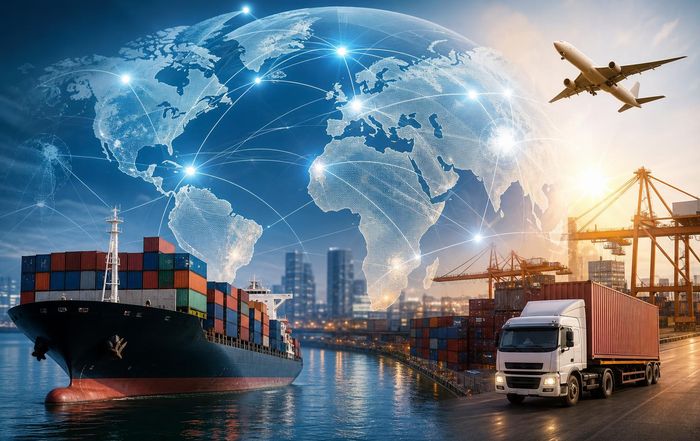
Global Trade Trends Transforming International Business
How Global Trade Entered a New Era
Global trade has clearly moved beyond the post-financial-crisis and post-pandemic recovery narratives that dominated the previous decade and has entered a structurally different era, defined by strategic competition, accelerated digitization, and a more explicit alignment between trade, technology, and sustainability. For the business audience of BizNewsFeed.com, which follows developments in AI, banking, business, crypto, the economy, founders, funding, global markets, jobs, technology, and travel, this shift is not an abstract macroeconomic story but a daily operating reality that shapes supply chains, capital allocation, workforce planning, and competitive strategy in every major region from North America and Europe to Asia, Africa, and South America.
The World Trade Organization's analysis of recent trade flows shows that while aggregate global merchandise trade volumes have resumed growth, the pattern of that growth has changed, with more regionalization, more services trade, and more fragmentation along geopolitical lines, as can be explored through the WTO's own resources for those seeking to understand evolving trade rules and dispute mechanisms at a deeper level on the World Trade Organization website. At the same time, the rise of digital trade, data localization rules, and the dominance of intangible assets have reshaped what it means to be a global company, and these forces are especially visible in sectors closely tracked by BizNewsFeed.com, such as financial services, advanced manufacturing, technology platforms, and sustainable infrastructure.
For executives, founders, and investors following the broader business context on the business hub, the key question is no longer whether global trade will grow, but rather how its structure, governance, and technological underpinnings will evolve, and how companies can position themselves to benefit from new opportunities while managing heightened risk and regulatory complexity.
From Hyper-Globalization to "Risk-Managed Globalization"
The period from the early 1990s to the late 2010s is often described by economists as an era of hyper-globalization, characterized by rapid offshoring, just-in-time supply chains, and a strong assumption that cross-border integration would continue to deepen, particularly between the United States, Europe, and China. By 2026, that assumption has been decisively replaced by what many trade strategists now call "risk-managed globalization," in which companies still trade globally but design their networks to be more resilient, diversified, and politically aware.
This shift is visible in the increasing emphasis on nearshoring and friend-shoring, with manufacturers in the United States and Canada moving parts of their production closer to home in Mexico and Central America, European firms re-evaluating footprints in Eastern Europe and North Africa, and Asian companies exploring new bases in Southeast Asia and India, all in response to geopolitical tensions, sanctions regimes, and the recognition that supply chain fragility can have severe financial and reputational consequences. Organizations such as the International Monetary Fund have highlighted these patterns in their research on trade fragmentation and its macroeconomic impact, which can be explored further through IMF's analysis of global economic outlooks.
For readers following the interplay between macro trends and corporate strategy via the site's economy coverage, the practical implication is that global trade is not retreating but being re-engineered, with more emphasis on redundancy, multi-sourcing, and scenario planning, and with boardrooms across the United States, United Kingdom, Germany, Canada, Australia, and major Asian economies institutionalizing geopolitical risk as a core dimension of supply chain design rather than a peripheral concern.
The Digitalization of Trade and the Rise of AI-Driven Commerce
One of the most consequential developments in global trade is the digitalization of both goods and services flows, driven by the convergence of cloud infrastructure, 5G connectivity, and artificial intelligence. Cross-border e-commerce platforms, digital marketplaces, and software-as-a-service providers have turned small and mid-sized enterprises in markets such as Spain, Italy, the Netherlands, and South Korea into global sellers almost overnight, while large enterprises increasingly orchestrate complex digital ecosystems that span logistics, payments, compliance, and customer engagement.
Artificial intelligence has moved from experimental pilots to production-grade trade infrastructure, with customs authorities deploying AI-based risk engines to screen shipments, logistics providers using predictive analytics to optimize routing and capacity, and multinational corporations integrating AI into demand forecasting, inventory management, and dynamic pricing. Businesses tracking AI's impact on trade and operations through the AI section will recognize that this is not only about cost reduction but also about enabling entirely new business models, such as real-time, cross-border digital services and embedded financial products that accompany physical goods.
International organizations and think tanks, including the Organisation for Economic Co-operation and Development, have been analyzing the regulatory and policy implications of digital trade, particularly around data flows, taxation, and competition, and executives can deepen their understanding of these issues by reviewing the OECD's work on digital trade and data governance. As governments in Europe, Asia, and North America refine digital trade agreements and data localization rules, companies must incorporate regulatory intelligence into their technology architectures, ensuring that data routing, storage, and processing comply with overlapping jurisdictional requirements while preserving operational efficiency.
Banking, Payments, and the New Architecture of Cross-Border Finance
The transformation of global trade is inseparable from changes in cross-border finance, where traditional documentary trade finance instruments such as letters of credit are being supplemented and in some cases replaced by digital platforms, real-time payment systems, and tokenized assets. Banks in the United States, United Kingdom, Singapore, and the European Union are investing heavily in trade finance digitization, leveraging blockchain-based solutions, electronic bills of lading, and AI-driven compliance checks to reduce fraud risk, accelerate settlement, and improve transparency for all parties in a transaction.
Central banks and major financial institutions, including the Bank for International Settlements, have been piloting and analyzing cross-border central bank digital currency (CBDC) corridors, which, if scaled, could significantly alter the mechanics of trade settlement, foreign exchange management, and liquidity provision, particularly for emerging markets in Africa, South America, and Southeast Asia. Those interested in the technical and policy dimensions of these experiments can explore the BIS's extensive documentation on innovations in payments and CBDCs.
For corporate treasurers and trade finance teams following developments in banking coverage, the key trend is the gradual move toward more programmable, data-rich trade finance, where transaction data, shipment data, and financial data are increasingly integrated, enabling more accurate credit risk assessment, automated compliance with sanctions and anti-money-laundering rules, and more tailored working capital solutions for exporters and importers across regions such as Germany, China, Brazil, and South Africa.
Crypto, Tokenization, and the Parallel Rails of Global Trade
Alongside the evolution of traditional banking, the crypto and digital asset ecosystem has created parallel rails for value transfer and asset representation that intersect with trade in complex ways. While the speculative cycles of cryptocurrencies have attracted headlines, the more quietly transformative development for international business is the emergence of tokenized trade assets, on-chain supply chain financing, and stablecoin-based cross-border payments that can reduce friction for smaller exporters and digital-first businesses.
Major corporations and financial institutions are experimenting with tokenized invoices, warehouse receipts, and even tokenized carbon credits that can be traded or used as collateral, and some logistics and commodity firms are exploring blockchain-based systems for provenance tracking, particularly for high-value goods and regulated commodities. Regulatory authorities from the United States Securities and Exchange Commission to the Monetary Authority of Singapore are refining frameworks to balance innovation with investor protection, and the Financial Stability Board has examined the systemic implications of global stablecoins and crypto-asset markets, providing further context on digital asset regulation and stability.
For fans using crypto section to track how digital assets intersect with trade, the key takeaway is that tokenization is moving from concept to implementation in selected corridors and asset classes, and that over the coming years, tokenized trade documents, programmable payments, and interoperable digital identity solutions may become part of the standard toolkit for internationally active companies, especially in tech-savvy markets like Singapore, South Korea, and the Nordic countries.
Supply Chains, Resilience, and the Geography of Production
The geography of production is undergoing a profound reconfiguration, as companies reassess the balance between cost efficiency and resilience in light of recent disruptions, including health crises, climate-related shocks, cyber incidents, and geopolitical tensions. Multinationals in sectors from automotive and electronics to pharmaceuticals and consumer goods are diversifying their supplier bases across Asia, Eastern Europe, and Latin America, while also investing in automation and advanced manufacturing technologies to make higher-cost locations in the United States, Canada, and Western Europe more competitive.
Organizations such as the World Bank have highlighted the importance of resilient supply chains for development and poverty reduction, noting that trade disruptions can disproportionately affect emerging markets that rely on export-led growth, and policymakers and businesses alike can explore these dynamics further through World Bank resources on global value chains and trade. For companies, resilience now encompasses not only physical redundancy but also digital continuity, cybersecurity, and the ability to rapidly reconfigure production in response to regulatory or demand shocks.
Readers of global markets and trade coverage will recognize that this reconfiguration is creating new investment corridors, such as increased interest in manufacturing in Mexico for North American markets, expanded electronics and semiconductor capacity in Vietnam and Malaysia, and renewed focus on industrial zones in countries such as Poland and the Czech Republic to serve European demand, all of which change the calculus for logistics, talent acquisition, and capital deployment.
Sustainability, Climate Policy, and the Greening of Trade
Sustainability has shifted from a peripheral corporate social responsibility topic to a central determinant of trade competitiveness, as governments implement carbon pricing, border adjustment mechanisms, and stricter environmental, social, and governance (ESG) disclosure rules. The European Union's Carbon Border Adjustment Mechanism, for example, has prompted exporters from countries such as China, India, Turkey, and South Africa to reassess their emissions profiles and reporting capabilities, while similar discussions are underway in other major economies, including the United States, Canada, and Japan.
International climate agreements and national net-zero commitments are reshaping investment in energy, transport, and industrial processes, with significant implications for trade in green technologies such as solar panels, wind turbines, electric vehicles, and hydrogen equipment, as well as for trade in critical minerals like lithium, cobalt, and rare earth elements. The United Nations Environment Programme and other multilateral bodies have been tracking the intersection of trade and climate policy, and executives can delve deeper into these linkages by exploring UNEP's work on trade and sustainable development.
For businesses engaging with sustainability topics on sustainable business page, the strategic reality is that carbon intensity, resource efficiency, and traceability are becoming trade issues, not just environmental issues, and that companies in Europe, Asia, North America, and beyond must integrate climate considerations into sourcing strategies, logistics choices, and product design to maintain market access and meet investor expectations.
The Changing Role of Founders, Funding, and Innovation Ecosystems
Global trade patterns are increasingly shaped by the decisions of founders and investors who build and back high-growth companies with international ambitions from day one. Startups in logistics technology, trade finance, digital identity, and supply chain analytics are attracting significant venture capital and private equity funding, particularly in hubs such as the United States, United Kingdom, Germany, Singapore, and Israel, but also in emerging ecosystems in Africa, Latin America, and Southeast Asia.
These founders are building platforms and tools that lower the barriers to cross-border commerce for small and medium-sized enterprises, enabling businesses in markets such as Nigeria, Vietnam, Colombia, and Poland to access global customers, financing, and compliance support without the overheads that historically favored large multinationals. Global accelerators, corporate venture arms, and sovereign wealth funds are increasingly focused on trade-enabling technologies, recognizing their potential to drive both economic growth and strategic resilience.
For readers who follow entrepreneurial stories and capital flows on founders and funding sections, this means that the next generation of trade infrastructure will be built not only by large incumbents but also by agile startups that can rapidly adapt to regulatory changes and customer needs across regions, and that the geography of innovation itself is becoming more distributed, with talent and capital flowing more fluidly between established and emerging hubs.
Labor, Skills, and the Future of Global Trade Jobs
As trade becomes more digitized, automated, and regulated, the nature of jobs linked to global commerce is changing across advanced and emerging economies. Traditional roles in manufacturing, warehousing, and low-skill logistics are being reshaped by robotics, AI-based optimization, and advanced planning systems, while new roles are emerging in areas such as trade compliance, data analytics, digital marketing for cross-border e-commerce, and customer experience management for international clients.
Countries such as Germany, Sweden, Singapore, and South Korea are investing heavily in vocational training and lifelong learning programs to equip workers with the skills needed for these new roles, and international organizations including the International Labour Organization are examining how trade, technology, and labor markets interact, with particular attention to inclusivity and decent work standards, as reflected in ILO analyses of employment trends in a globalized economy. At the same time, remote work and digital collaboration tools have opened opportunities for knowledge workers in countries like India, the Philippines, South Africa, and Brazil to participate more directly in global value chains without physically relocating.
The BizNewsFeed audience that follows employment trends and workforce dynamics through the site's jobs coverage will recognize that companies must now think of talent strategy as an integral component of trade strategy, ensuring that they can attract, develop, and retain professionals with cross-cultural fluency, regulatory literacy, and digital competencies, while also navigating immigration policies, remote work regulations, and evolving expectations around work-life balance in markets across Europe, North America, and Asia-Pacific.
Travel, Mobility, and the Human Dimension of Trade
Although much of the discussion about global trade focuses on goods, services, and capital, the human mobility that underpins international business remains critical, even in an era of advanced digital collaboration. Business travel has rebounded and evolved, with executives and specialists traveling more selectively but often for more strategic purposes, such as establishing new supplier relationships, conducting on-site due diligence, or negotiating complex cross-border partnerships in regions ranging from Southeast Asia and the Middle East to Eastern Europe and Africa.
Airlines, hospitality providers, and travel technology companies are adapting to this new pattern of demand, investing in digital tools for frictionless travel, enhanced health and safety protocols, and more flexible booking models that accommodate the volatility of international schedules. Governments are simultaneously refining visa regimes, trusted traveler programs, and digital identity initiatives that can facilitate legitimate business travel while addressing security and public health concerns, and these policies have direct implications for how quickly companies can respond to opportunities in fast-growing markets.
For professionals who rely on mobility to build and manage international operations and who follow these trends on travel section, the message is that while virtual communication has permanently changed aspects of deal-making and relationship management, in-person engagement remains a differentiator in complex cross-border transactions, and companies that manage travel strategically can strengthen their position in competitive markets from the United States and United Kingdom to Japan, Thailand, and the United Arab Emirates.
Business Leaders = Hello :)
For the global executive, investor, or founder who turns here as a daily lens on international business, the overarching implication of these trade trends is that global strategy can no longer be treated as a static expansion plan but must be an adaptive, technology-enabled, and risk-aware discipline that integrates insights from macroeconomics, geopolitics, digital innovation, and sustainability. Decisions about where to source, where to sell, where to locate talent, and how to structure financing are now deeply interdependent, and misalignment in any one area can quickly erode competitive advantage.
Leading organizations are therefore building cross-functional trade strategy teams that combine expertise from supply chain, finance, legal, technology, and sustainability, and are investing in data platforms and analytics capabilities that provide real-time visibility into trade flows, regulatory changes, and emerging risks across their global footprint. They are also engaging more proactively with policymakers, industry associations, and multilateral institutions to help shape the evolving rules of the game and to anticipate changes that could affect market access or operating models.
As folks continue to follow daily changes across integrated coverage of global news and markets, technology innovation on the technology page, and the broader business context, the through-line is clear: global trade in 2026 is not retreating but transforming, and those companies that can combine deep domain expertise, robust digital capabilities, and a commitment to transparency and sustainability will be best positioned to navigate uncertainty and capture the new opportunities emerging in a more complex, but still profoundly interconnected, global economy.