

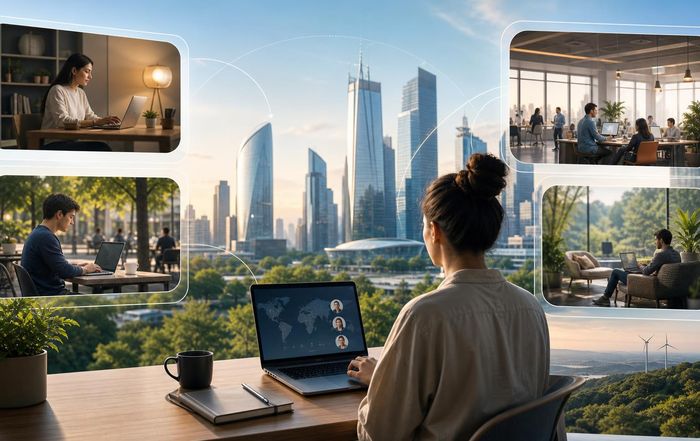
The Future of Flexible Work Models
A Defining Inflection Point for Work in 2026?
Well then, flexible work has finally moved from emergency response to strategic imperative. What began as a global experiment during the pandemic years has matured into a complex, data-driven rethinking of how, where, and when work is done. For the global readership of BizNewsFeed, spanning executives in the United States, Europe, Asia, Africa, and the Americas, the future of flexible work is no longer a theoretical debate; it is a central determinant of competitiveness, innovation capacity, talent attraction, and long-term enterprise value.
Across sectors as diverse as financial services, technology, manufacturing, professional services, and travel, leadership teams are converging on a core insight: flexible work models are not a perk to be granted or withdrawn at will, but an operating system for modern organizations. As BizNewsFeed continues to track structural shifts in business and markets, it is increasingly clear that the companies that learn to design, govern, and continuously refine flexible work models with rigor and transparency are building a durable advantage in a world defined by demographic shifts, digital transformation, and geopolitical uncertainty.
From Remote Work Experiment to Strategic Architecture
The early 2020s were characterized by a binary and often polarized discussion about remote versus office-based work. By 2026, leading organizations in the United States, United Kingdom, Germany, Canada, Australia, Singapore, and beyond have largely abandoned that binary framing. Instead, they are architecting flexible work along several interlocking dimensions: location, time, employment relationship, and task modularity.
Location flexibility, encompassing hybrid and fully remote roles, remains the most visible dimension. In major financial centers such as New York, London, Frankfurt, Zurich, Singapore, and Hong Kong, global banks and asset managers have moved toward structured hybrid models, typically mandating two to three days per week in the office for roles that benefit from in-person collaboration, while allowing fully remote arrangements for specialized, analytics-heavy, or back-office functions. In parallel, digital-first organizations in North America, Europe, and Asia are increasingly location-agnostic, hiring talent from secondary cities and emerging markets, thereby reshaping local labor markets and contributing to new patterns in global economic activity.
Time flexibility has become equally critical. Flextime, compressed workweeks, and asynchronous collaboration have been formalized in corporate policies and embedded in digital workflows. Research from organizations such as the OECD and World Economic Forum has influenced policy makers and boards, prompting more nuanced thinking about productivity measurement and working time regulation, particularly in knowledge-intensive sectors. Leaders seeking to understand the broader policy context increasingly turn to resources that analyze future of work trends in depth.
At the same time, the employment relationship itself is evolving. The rise of highly skilled independent contractors, fractional executives, and project-based contributors has created a more fluid talent ecosystem. While the gig economy of the 2010s was often associated with precarious work, the mid-2020s have seen the emergence of more professionalized, well-compensated independent careers, particularly in technology, finance, and creative industries. Regulatory bodies in the United States, United Kingdom, European Union, and Asia-Pacific are working to balance flexibility with worker protections, guided in part by labor market analyses from institutions such as the International Labour Organization, where leaders can review global employment insights.
The Role of AI and Automation in Enabling Flexibility
The acceleration of artificial intelligence since 2023 has fundamentally reshaped what flexible work can look like. Generative AI, advanced analytics, and intelligent automation have made it possible to disaggregate jobs into tasks, orchestrate workflows across time zones, and provide real-time performance insights that underpin trust-based models of flexibility. For the BizNewsFeed audience tracking AI and technology trends, the convergence of human flexibility and machine intelligence is one of the defining business stories of this decade.
Leading technology firms such as Microsoft, Google, and OpenAI have embedded AI deeply into productivity suites, making asynchronous collaboration more seamless. Meeting summarization, multilingual transcription, auto-generated documentation, and AI-assisted coding have reduced the need for synchronous, co-located work, particularly in software development, legal services, consulting, and research. Organizations that once relied heavily on real-time coordination now design processes where teams in Europe, North America, and Asia can contribute in staggered cycles, with AI agents maintaining continuity and context.
At the same time, AI has introduced new management challenges. Executives must navigate questions around surveillance, data privacy, and algorithmic bias when deploying AI-driven productivity tools. The most sophisticated organizations in the United States, Germany, the Nordics, and Singapore are adopting explicit AI governance frameworks, drawing on guidance from bodies such as the OECD AI Policy Observatory, where decision-makers can explore responsible AI principles. These frameworks are increasingly intertwined with flexible work policies, as leaders seek to ensure that data used to evaluate remote and hybrid workers is transparent, fair, and proportionate.
For BizNewsFeed, which reports extensively on technology and business model innovation, a key emerging theme is the rise of AI-augmented management. Instead of relying on physical presence as a proxy for commitment, managers now use AI-enabled dashboards to focus on outputs, quality, and collaboration patterns. This shift, while still uneven across industries and regions, underpins more mature flexible work models that reward results rather than visibility.
Sector-Specific Transformations: Banking, Crypto, and Beyond
Flexible work is not evolving uniformly across sectors. In heavily regulated industries such as banking and capital markets, the transition has been more cautious but nonetheless profound. Major institutions in New York, London, Frankfurt, and Zurich have invested heavily in secure virtual desktops, zero-trust architectures, and advanced compliance monitoring to enable traders, risk analysts, and operations staff to work remotely without compromising regulatory obligations. As BizNewsFeed continues its coverage of banking and financial innovation, it is evident that the future of flexible work in finance is inseparable from advanced cybersecurity and regulatory technology.
In parallel, the crypto and digital assets sector, which was born global and digital, has embraced fully distributed workforces as a strategic norm. Protocol foundations, decentralized autonomous organizations, and Web3 startups across the United States, Europe, and Asia-Pacific coordinate contributors across dozens of countries, relying on token-based incentives, open-source collaboration, and community governance. While the volatility of digital asset markets has tempered some of the exuberance of the early 2020s, the underlying organizational innovations remain influential. Readers tracking crypto and digital asset developments can observe how these entities are redefining what it means to build cross-border teams and how flexible work can intersect with decentralized ownership.
Professional services, consulting, and legal sectors in the United Kingdom, Canada, Australia, and continental Europe have taken a hybrid approach, often maintaining premium office spaces in major cities while allowing significant flexibility for research, drafting, and analysis work. These firms are experimenting with "client-centric flexibility," aligning on-site work requirements with client preferences and deal cycles rather than internal hierarchies. Manufacturing, logistics, and healthcare, by contrast, face more structural constraints, as many roles require physical presence. Yet even in these industries, flexibility in scheduling, shift design, and support functions is becoming a differentiator in attracting and retaining scarce talent, especially in tight labor markets in Germany, Japan, South Korea, and the Nordics.
Global Talent Markets and the Geography of Work
One of the most significant long-term consequences of flexible work is the reconfiguration of global talent markets. As organizations across North America, Europe, and Asia adopt location-agnostic hiring practices, skilled professionals in emerging markets such as Brazil, South Africa, Malaysia, and Thailand are gaining access to roles that were previously concentrated in traditional financial and technology hubs. This shift is redistributing income, skills, and innovation capacity across regions, with profound implications for national competitiveness and urban development.
Countries such as Portugal, Spain, Greece, and several Southeast Asian nations have introduced digital nomad visas and tax incentives to attract remote workers, seeking to revitalize local economies and tap into global income streams. Meanwhile, secondary cities in the United States, United Kingdom, Germany, and Canada are positioning themselves as lifestyle-rich, cost-effective hubs for hybrid workers who no longer need to live in primary metropolitan centers. Urban planners and policy makers are drawing on research from organizations like McKinsey & Company, where leaders can explore analyses of the future of work and urbanization, to rethink infrastructure, housing, and transportation in light of more distributed work patterns.
For the BizNewsFeed audience following global business developments, this geographic unbundling of work presents both opportunities and risks. On the one hand, companies can access diverse talent pools, hedge geopolitical risk, and operate closer to customers across continents. On the other hand, they must navigate complex regulatory environments, cross-border tax issues, and cultural integration challenges as teams span the United States, Europe, Asia, and Africa. Organizations that invest in cross-cultural leadership training, robust digital infrastructure, and clear remote work policies are better positioned to harness the benefits of global flexibility while mitigating fragmentation and misalignment.
Implications for Founders, Funding, and High-Growth Ventures
For founders and investors, flexible work models have become a foundational design choice rather than a late-stage perk. Early-stage startups in technology, fintech, and climate innovation are increasingly "remote-native," structuring their organizations from day one to operate across borders and time zones. This approach allows them to recruit niche talent in AI, cybersecurity, and deep tech from around the world, often at lower cost than competing with incumbents in Silicon Valley, London, or Berlin. As BizNewsFeed documents in its coverage of founders and funding dynamics, flexible work is now intertwined with capitalization strategies, valuation narratives, and exit planning.
Venture capital firms in the United States, United Kingdom, and Europe have adapted their due diligence frameworks to assess a startup's remote operating model, collaboration tooling, and cultural cohesion. Investors increasingly scrutinize how founding teams plan to maintain innovation velocity and governance discipline in distributed settings. At the same time, flexible work has expanded the universe of investable founders, enabling entrepreneurs in regions such as Africa, South America, and Southeast Asia to build globally relevant companies without relocating. This trend aligns with the broader democratization of capital access, as digital platforms connect founders and investors across continents, reinforcing the importance of funding trends and capital flows in shaping the future of work.
Corporate venture arms and private equity funds are also recalibrating their value-creation playbooks. Post-acquisition integration strategies now routinely include harmonizing flexible work policies, consolidating collaboration platforms, and rationalizing global real estate footprints. Firms that can systematically identify where flexibility enhances productivity and where co-location remains critical for innovation or compliance are better able to unlock synergies and protect culture during rapid growth or restructuring.
Productivity, Culture, and Trust in a Flexible Era
The debate over whether flexible work enhances or undermines productivity has evolved considerably by 2026. Early anecdotal evidence has given way to more rigorous, longitudinal data from large enterprises, academic institutions, and think tanks. Studies from universities and research centers in the United States, United Kingdom, Germany, and Scandinavia increasingly converge on a nuanced conclusion: well-designed flexible work models can sustain or improve productivity, but outcomes depend heavily on management practices, job design, and the quality of digital infrastructure.
Trust has emerged as the central currency of flexible work. Companies that cling to presenteeism and rely on invasive monitoring technologies often see engagement and retention decline, particularly among high-skilled workers in technology, finance, and creative roles. In contrast, organizations that articulate clear expectations, invest in manager capability, and provide transparent performance metrics tend to realize the benefits of flexibility while maintaining accountability. Business leaders seeking frameworks for high-trust, high-performance cultures often reference insights from the Harvard Business Review, where they can explore research on remote management and organizational culture.
Culture building in flexible settings has become more intentional. Rituals that once occurred organically in offices-informal mentoring, spontaneous problem-solving, social bonding-are now deliberately designed into digital and in-person interactions. Off-sites, regional hubs, and periodic "anchor weeks" are used to reinforce identity and alignment, particularly in global organizations with teams across North America, Europe, and Asia. For BizNewsFeed readers following jobs and workforce trends, these practices highlight a critical leadership capability: the ability to orchestrate a cohesive culture across physical and virtual spaces.
Sustainability, Real Estate, and the ESG Lens
Flexible work models intersect powerfully with environmental, social, and governance (ESG) priorities. Reduced commuting, smaller office footprints, and more efficient space utilization can significantly lower an organization's carbon emissions, especially in metropolitan regions such as New York, London, Paris, Tokyo, and Shanghai. Companies pursuing net-zero commitments increasingly include flexible work in their decarbonization strategies, aligning with broader efforts to advance sustainable business practices advocated by organizations such as the United Nations Environment Programme.
From a social perspective, flexibility can support diversity, equity, and inclusion objectives by accommodating caregivers, people with disabilities, and workers in regions with limited access to major corporate hubs. However, it can also exacerbate inequalities if remote workers are sidelined in promotion and development opportunities. Leading organizations in Europe, North America, and Asia are therefore embedding equity safeguards into their hybrid policies, ensuring that visibility and advancement are not disproportionately tied to physical presence.
Real estate strategies are undergoing a structural reset. Corporate occupiers are renegotiating leases, consolidating locations, and redesigning offices as collaboration-centric spaces rather than rows of individual desks. Landlords, developers, and investors are reimagining office buildings as flexible, amenity-rich hubs that can adapt to fluctuating occupancy. These shifts have knock-on effects for urban economies, transportation systems, and local services, which BizNewsFeed continues to monitor through its coverage of broader economic and market dynamics and sustainability-driven business transformation.
Policy, Regulation, and the Role of Governments
Governments and regulators are playing an increasingly active role in shaping the contours of flexible work. Labor laws, tax regimes, and social protection systems in the United States, European Union, United Kingdom, and Asia-Pacific are being updated to address questions that were peripheral a decade ago: How should cross-border remote work be taxed? What obligations do employers have regarding home-office ergonomics and mental health? How can social insurance systems adapt to more fluid employment relationships?
In Europe, frameworks such as the "right to disconnect" and evolving guidance on remote work entitlements are influencing corporate policies, while in North America and Asia, a more decentralized, market-driven approach is evident, albeit with growing attention to worker protections. International organizations, including the World Bank, are providing comparative analyses and policy recommendations that help governments understand labor market reforms and digital work, which in turn shape the operating environment for multinational corporations.
For the BizNewsFeed community, which tracks regulatory shifts across economies and regions, the key takeaway is that flexible work is no longer a purely corporate decision. It sits at the intersection of employment law, tax policy, immigration rules, and digital infrastructure investments. Executives must therefore engage proactively with policy makers, industry associations, and worker representatives to ensure that emerging regulations support innovation while safeguarding worker rights.
Travel, Mobility, and the Reimagined Business Trip
Flexible work is also transforming corporate travel and mobility patterns. As hybrid and remote models become entrenched, organizations are rethinking when and why employees travel. Routine status meetings and internal reviews that once justified frequent flights between New York, London, Frankfurt, Singapore, and Sydney are increasingly conducted virtually, while in-person gatherings are reserved for high-value activities such as client negotiations, strategy off-sites, product launches, and complex project kick-offs.
This shift has implications for airlines, hotels, and business travel providers, particularly in markets such as the United States, United Kingdom, Germany, and Japan, where corporate travel historically represented a significant share of revenue. Travel policies are being rewritten to align with ESG targets, cost optimization, and employee well-being, with many organizations adopting "purpose-driven travel" frameworks that scrutinize the incremental value of each trip. Readers interested in how these trends intersect with the broader travel industry can explore BizNewsFeed's coverage of travel, tourism, and mobility, where flexible work is increasingly recognized as a structural driver of demand patterns.
At the individual level, flexible work has enabled new forms of mobility, including "work from anywhere" arrangements and extended stays that blend professional and personal time. While these arrangements can enhance quality of life and talent retention, they also introduce compliance complexities related to tax residency, social security, and data protection, particularly when employees work from multiple countries within a year. Forward-looking organizations are investing in specialized advisory services and digital tools to manage these risks while preserving the benefits of location flexibility.
Preparing for the Next Decade of Flexible Work
Ok the future of flexible work is best understood not as a destination but as an evolving capability. Organizations that treat flexibility as a one-time policy decision are likely to fall behind, while those that embed it into their operating models, leadership development, and technology investments will continue to refine and strengthen their competitive position. For BizNewsFeed, whose unique unbiased news mission is to provide timely, analytical coverage across business, technology, and global markets, flexible work has become a lens through which to interpret shifts in AI adoption, banking innovation, crypto ecosystems, labor markets, and sustainable growth.
In practical terms, the most resilient organizations across the United States, Europe, Asia, Africa, and the Americas are adopting a portfolio approach to work design, combining structured hybrid models for collaborative functions, fully remote arrangements for specialized or geographically distributed roles, and targeted on-site presence for activities that truly benefit from co-location. They are investing in AI-enabled tools that support asynchronous collaboration, building robust data governance to protect trust, and aligning flexible work strategies with ESG commitments, real estate portfolios, and global talent strategies.
For executives, founders, investors, and business makers who rely on BizNewsFeed to more easily understand the interplay between news, markets, and long-term trends, the message is clear: flexible work is no longer a temporary accommodation or a narrow HR initiative; it is a core dimension of enterprise strategy and societal development. The organizations that will define the next decade are those that approach flexible work with the same rigor they apply to capital allocation, technology roadmaps, and market expansion, recognizing that how people work is inseparable from how value is created in an increasingly interconnected, AI-augmented, and sustainability-conscious global economy.