

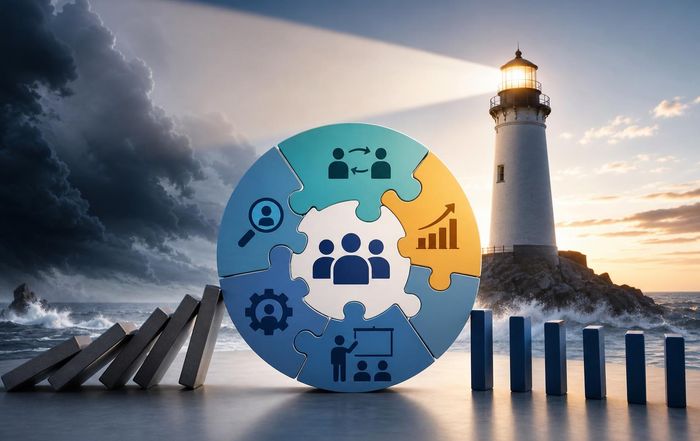
How Workforce Planning Improves Business Resilience
As volatility in markets, technology, regulation and geopolitics continues to test corporate strategies across North America, Europe, Asia and beyond, business resilience is no longer a defensive concept but a core source of competitive advantage. For loyal subs and new visiting community of BizNewsFeed who operate at the intersection of strategy, finance, technology and people, one theme has become unmistakably clear: disciplined, data-driven workforce planning is now one of the most powerful levers for improving resilience, protecting margins and sustaining growth across cycles.
From Headcount Management to Strategic Workforce Architecture
Historically, many organizations treated workforce planning as a narrow budgeting exercise focused on annual headcount approvals, hiring freezes and incremental cost controls. In 2026, leading enterprises in the United States, United Kingdom, Germany, Singapore and beyond are reframing it as a strategic discipline that aligns talent, skills and organizational structures with long-term business objectives, capital allocation and risk management.
Strategic workforce planning now incorporates multi-year demand forecasting, scenario modeling, skills adjacency mapping and location strategy, integrating insights from finance, operations, technology and HR. Executives increasingly rely on integrated planning tools that combine internal HRIS and payroll data with external labor market intelligence from sources such as LinkedIn's Workforce Reports and the OECD's employment outlook, enabling them to anticipate talent shortages, wage pressures and regulatory changes before they erode competitiveness. For BizNewsFeed readers focused on the intersection of people and performance, this shift from reactive headcount control to proactive workforce architecture is redefining how resilient organizations are built and governed.
The Direct Link Between Workforce Planning and Business Resilience
Business resilience in 2026 is measured not only by how well a company withstands shocks but by how quickly it can reconfigure its operating model, cost base and talent deployment to capture emerging opportunities. Strategic workforce planning strengthens resilience along several critical dimensions that resonate across sectors covered by BizNewsFeed, from financial services and technology to manufacturing, healthcare, energy and travel.
First, it enhances financial resilience by aligning labor costs with revenue volatility and capital plans. Finance leaders can integrate workforce scenarios directly into their operating models, adjusting hiring, redeployment and automation plans as macroeconomic indicators change. Readers tracking global macro trends via BizNewsFeed's economy coverage increasingly see that organizations with robust workforce plans experience fewer abrupt restructurings, lower severance charges and more stable earnings guidance, which in turn supports investor confidence and credit ratings.
Second, it strengthens operational resilience by ensuring that critical roles, skills and teams are protected, cross-trained and supported by clear succession pipelines. This is particularly important in sectors such as banking, crypto, technology and travel, where operational continuity is essential to customer trust and regulatory compliance. By mapping critical capabilities and dependencies, leaders can design redundancy, cross-functional squads and knowledge transfer mechanisms that reduce the impact of attrition, illness, supply chain disruption or geopolitical instability. Readers can explore how these dynamics play out in specific industries through the broader lens of BizNewsFeed's business analysis.
Third, it reinforces strategic resilience by embedding talent considerations into growth decisions such as entering new markets, launching new products or transitioning business models. Expansion into regions such as Southeast Asia, the Nordics or Sub-Saharan Africa is increasingly constrained not by capital but by talent availability, regulatory conditions and cultural alignment. Organizations that integrate workforce planning into their global strategy are better positioned to assess where they can scale profitably, how quickly they can build or acquire capabilities, and what mix of local hires, global mobility and remote work will best support sustainable growth.
AI-Powered Workforce Planning: From Forecasting to Dynamic Reconfiguration
The acceleration of artificial intelligence has transformed workforce planning from a static annual process into a dynamic, continuously updated capability. In 2026, leading companies are using advanced analytics, machine learning and generative AI to forecast workforce demand, identify skills gaps and simulate workforce scenarios in real time, often drawing on tools and practices discussed in BizNewsFeed's AI coverage.
AI-driven models can analyze historical demand patterns, project pipelines, product roadmaps, regulatory changes and macroeconomic signals to predict where and when specific roles or skills will be needed. For instance, a global bank expanding digital wealth management in Europe and Asia can use AI to estimate the mix of product managers, data scientists, compliance professionals and relationship managers required in London, Frankfurt, Singapore and Tokyo, while incorporating expected changes in regulation, customer adoption and technology platforms. Organizations can learn more about responsible AI adoption and governance through resources such as the World Economic Forum's AI initiatives.
Moreover, AI tools help organizations understand skills adjacencies, enabling more resilient talent strategies that rely less on external hiring and more on internal mobility and reskilling. By analyzing employee profiles, training histories and performance data, AI can suggest which employees are best positioned to transition into high-demand roles such as cybersecurity, cloud engineering or ESG reporting with targeted training. This capability allows companies to respond more quickly to shifts in demand while preserving institutional knowledge and culture, a theme that resonates strongly with founders and executives featured in BizNewsFeed's founders section.
At the same time, responsible organizations are acutely aware of the ethical, legal and reputational risks associated with algorithmic decision-making in HR. To maintain trustworthiness, they are implementing governance frameworks, bias audits and transparency protocols aligned with emerging regulations in the European Union, the United States and other jurisdictions. Guidance from bodies such as the European Commission on AI and employment helps organizations design AI-enabled workforce planning processes that are fair, explainable and compliant, reinforcing both workforce trust and regulatory resilience.
Banking, Crypto and Financial Services: Workforce Planning as a Risk Management Tool
In the banking, payments and crypto sectors, workforce planning has become tightly interwoven with risk management and regulatory compliance. Institutions operating across the United States, United Kingdom, Switzerland, Singapore and the broader European and Asian markets face an increasingly complex regulatory environment, heightened cyber threats and rapid innovation in digital assets, decentralized finance and embedded finance. For readers following developments in BizNewsFeed's banking coverage and crypto insights, the role of workforce planning in this arena is particularly pronounced.
Banks and regulated fintechs now routinely incorporate workforce planning into their operational resilience frameworks, ensuring that critical functions such as risk, compliance, cybersecurity, payments operations and treasury are staffed with appropriate expertise, capacity and redundancy. Supervisory expectations from authorities such as the Federal Reserve, the European Central Bank and the Monetary Authority of Singapore increasingly emphasize operational resilience, including the ability to maintain critical services during disruptions, which is directly influenced by workforce availability, location strategy and skills distribution. Readers can explore regulatory perspectives through resources like the Bank for International Settlements.
In the crypto and digital asset space, where talent in smart contract development, blockchain security, tokenomics and regulatory strategy remains scarce, strategic workforce planning is essential to avoid overreliance on a handful of key individuals, a risk that has contributed to past platform failures and security breaches. Leading players are designing workforce strategies that combine in-house expertise with carefully governed vendor partnerships and open-source contributions, while also planning for regulatory evolution in major markets such as the European Union, the United States and Asia-Pacific. This approach not only reduces key-person risk but also supports more predictable product roadmaps and investor confidence, themes that resonate strongly with capital markets coverage in BizNewsFeed's markets section.
Startups, Founders and Funding: Building Resilient Teams from Day One
For founders and early-stage companies, workforce planning can seem like a luxury compared to immediate priorities around product development, customer acquisition and fundraising. Yet the most resilient startups, especially in technology, fintech, healthtech and climate tech, are those whose leaders treat workforce design as a core element of their business model from the outset. Readers of BizNewsFeed who follow founders' journeys and venture funding trends through BizNewsFeed's funding coverage will recognize that investors are increasingly scrutinizing not only the quality of the founding team but also the robustness of their workforce strategy.
In 2026, venture capital and growth equity investors in the United States, Europe and Asia routinely ask founders about their talent roadmaps: how they intend to balance in-house and outsourced capabilities, which roles are truly critical versus opportunistic, how they will manage distributed teams across time zones, and how they plan to maintain culture as headcount grows. Founders who can articulate a clear workforce plan, supported by realistic hiring timelines and compensation benchmarks drawn from sources such as Glassdoor or Payscale, are better positioned to secure funding on favorable terms, especially in a more selective capital environment.
Workforce planning also improves resilience during downturns or funding delays. Startups that have thoughtfully staged their hiring, prioritized multi-skilled employees and built flexible contractor networks can adjust burn rates without dismantling their core capabilities. In contrast, those that have over-hired in non-core functions or concentrated critical knowledge in a few individuals are more vulnerable to shocks. For readers interested in the intersection of talent, capital and growth, BizNewsFeed continues to highlight case studies where workforce discipline has made the difference between survival and forced sale, reinforcing the importance of strategic people decisions for long-term resilience.
Globalization, Location Strategy and Talent Mobility
The global nature of business in 2026, spanning North America, Europe, Asia, Africa and South America, adds another layer of complexity to workforce planning. Organizations must navigate divergent labor laws, cultural expectations, tax regimes, geopolitical risks and infrastructure realities when deciding where to locate teams, shared service centers, R&D hubs and leadership roles. For BizNewsFeed readers tracking global trends via BizNewsFeed's global coverage, workforce planning is increasingly intertwined with location strategy and geopolitical risk management.
Resilient organizations are designing distributed, multi-hub workforce models that balance cost efficiency with risk diversification and access to talent. Rather than concentrating critical functions in a single city or country, they are spreading operations across complementary locations such as the United States, Canada and Mexico in North America; the United Kingdom, Germany, the Netherlands and Spain in Europe; and Singapore, India and Malaysia in Asia. This approach reduces exposure to localized disruptions, regulatory changes or political instability, while also tapping into diverse talent pools and perspectives.
At the same time, advances in remote work technology and collaboration tools, highlighted frequently in BizNewsFeed's technology section, have expanded the range of feasible workforce configurations. However, resilient organizations recognize that not all roles can be effectively performed remotely and that hybrid models require careful planning in areas such as cybersecurity, data privacy, performance management and cultural cohesion. By integrating these considerations into workforce planning, companies can design location and mobility strategies that support both operational continuity and employee engagement across regions from Scandinavia to South Africa and from Japan to Brazil.
Sustainable Workforce Planning and ESG-Driven Resilience
Sustainability has moved from the periphery to the core of corporate strategy, with environmental, social and governance (ESG) considerations now central to investor expectations, regulatory frameworks and customer preferences. Workforce planning is increasingly recognized as a critical component of the "S" and "G" dimensions of ESG, directly influencing social impact, diversity, equity and inclusion, employee well-being and governance structures. Readers interested in sustainability themes can explore how these dynamics intersect with business strategy through BizNewsFeed's sustainable business coverage.
Sustainable workforce planning focuses on building a labor model that is not only cost-effective but also humane, inclusive and future-proof. Organizations are designing roles and schedules that reduce burnout, support work-life balance and promote long-term employability, recognizing that chronic overwork, precarious contracts and limited development opportunities undermine both resilience and brand reputation. Leading practices in responsible employment can be explored through resources such as the International Labour Organization, which provides guidance on decent work, social protection and labor standards across regions and industries.
Moreover, investors and regulators are increasingly scrutinizing workforce metrics such as turnover, engagement, pay equity, diversity and training investment as indicators of long-term resilience. Companies that integrate these metrics into their workforce planning and governance processes are better positioned to demonstrate that they are managing human capital strategically rather than tactically. This, in turn, strengthens access to sustainable finance, improves employer brand in competitive labor markets and supports more stable customer and community relationships, reinforcing the virtuous cycle between sustainability and resilience that BizNewsFeed regularly highlights for its global readership.
Workforce Planning, Technology Adoption and Job Transformation
Technological disruption, particularly in AI, automation, robotics and cloud platforms, is reshaping job content, skills requirements and organizational structures across industries from manufacturing and logistics to healthcare, financial services and tourism. Rather than treating technology adoption and workforce planning as separate streams, resilient organizations are integrating them into a single transformation agenda that balances efficiency gains with responsible job redesign and reskilling. Readers can explore broader technology and jobs trends through BizNewsFeed's jobs coverage and its dedicated AI insights.
Effective workforce planning in this context begins with a granular understanding of tasks within roles, distinguishing between activities that can be automated, augmented or fundamentally reimagined. Organizations then design future-state roles that combine human strengths-such as judgment, empathy, creativity and complex problem-solving-with AI-enabled tools for data analysis, pattern recognition and workflow automation. By mapping these transitions over a multi-year horizon, companies can plan targeted reskilling programs, internal mobility pathways and selective hiring to ensure that employees are prepared for evolving roles rather than displaced by them.
Resources such as the World Economic Forum's Future of Jobs reports provide valuable insights into emerging roles and declining occupations across regions and sectors, helping organizations benchmark their workforce plans against global trends. For BizNewsFeed readers, the key takeaway is that resilience in the face of technological disruption depends not only on acquiring new tools but on orchestrating a thoughtful, human-centered workforce transition that preserves institutional knowledge, supports employee well-being and aligns with societal expectations around responsible innovation.
Travel, Mobility and the Human Side of Resilient Workforces
The travel and mobility sectors-airlines, hospitality, tourism, corporate travel and mobility services-offer a particularly vivid illustration of how workforce planning underpins resilience. These industries are highly sensitive to macroeconomic cycles, geopolitical tensions, health crises and environmental regulations, all of which can trigger abrupt swings in demand. Readers following developments in BizNewsFeed's travel coverage have seen how organizations that invested in flexible, cross-trained and well-supported workforces recovered more quickly from past disruptions and are better prepared for future shocks.
Airlines, for example, are refining workforce plans that balance full-time staff, part-time employees and contingent labor while ensuring that safety-critical roles such as pilots, maintenance engineers and air traffic coordinators are supported by robust training, certification and succession pipelines. Hotels and hospitality groups are designing multi-skilled roles that allow employees to flex between front-desk, food and beverage, event support and digital concierge services, improving both operational agility and career development. Corporate travel departments, meanwhile, are rethinking their internal workforce models to support hybrid work, virtual collaboration and evolving duty-of-care obligations.
These examples underscore a broader truth that resonates across all sectors: resilience is ultimately a human capability. Even the most sophisticated technology, capital structures and supply chains depend on people who can interpret signals, make decisions under uncertainty, collaborate across boundaries and adapt to new realities. Strategic workforce planning, when done well, is a disciplined way of honoring that reality, ensuring that organizations invest in the right people, in the right places, with the right support to navigate whatever comes next.
The Tiny but Mighty Part of BizNewsFeed in the Workforce Resilience Conversation
As organizations across the United States, Europe, Asia, Africa and the Americas grapple with the complexities of workforce planning, BizNewsFeed has positioned itself as a new content and trusted guide at the intersection of business, technology, labor markets and global trends. Through its dedicated coverage of business, economy, technology, jobs and news, the platform provides executives, founders, investors and policymakers with the insights they need to design resilient workforce strategies grounded in data, context and lived experience.
By curating perspectives from leading organizations, policymakers and researchers, BizNewsFeed emphasizes the importance of experience, expertise, authoritativeness and trustworthiness in navigating workforce challenges. Its coverage highlights not only best practices and success stories but also the trade-offs, failures and ethical dilemmas that accompany workforce decisions in a rapidly changing world. For readers who require a holistic view that spans AI, banking, crypto, sustainability, global markets and travel, BizNewsFeed offers an integrated vantage point that is rare in an increasingly fragmented media landscape.
As the decade unfolds, workforce planning will continue to evolve, shaped by new technologies, shifting demographics, regulatory reforms and geopolitical realignments. Yet the central insight for resilient organizations will remain constant: people are not a variable cost to be optimized in isolation but a strategic asset that underpins every aspect of performance, from innovation and customer experience to risk management and societal impact. By investing in thoughtful, data-driven and human-centered workforce planning, organizations can build the resilience required to thrive across cycles-and super fans of BizNewsFeed will be well-equipped to lead that transformation in their own enterprises and ecosystems.