

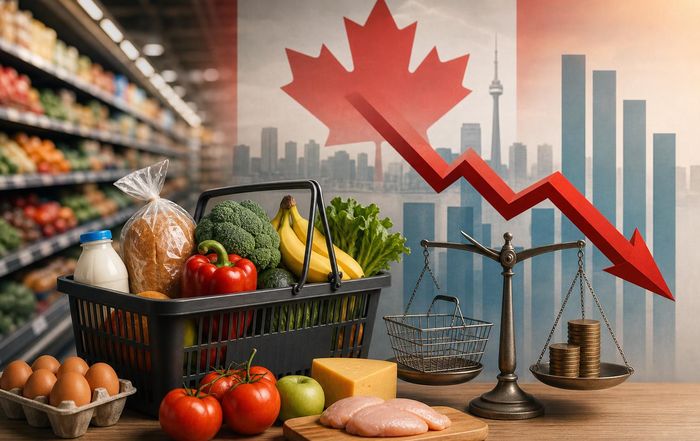
Canada's Grocery Market and the Economics of Price Competition
Canada's grocery aisles have become a focal point in a broader debate over inflation, corporate power, and how competitive the country's retail food market really is. Food prices surged faster than overall inflation from 2021 through much of 2023, and while headline inflation has eased, many Canadian households still feel that grocery bills have not returned to anything resembling "normal." Against that backdrop, policymakers, regulators, and economists are examining whether the structure of Canada's grocery market is limiting price competition, and if so, what can realistically be done about it.
This page looks at how Canada's grocery sector is organized, what economic theory says about price competition in such a market, and which policy tools might actually move the needle for consumers-without creating new problems for investment, supply, or jobs.
A concentrated market: who really sells food in Canada?
Canada's grocery sector is often described as an oligopoly: a market dominated by a small number of large players that closely watch each other's moves. According to the Competition Bureau of Canada, the "big three" national chains-Loblaw Companies, Sobeys/Sobeys parent Empire Company, and Metro-account for a substantial share of grocery sales, with Walmart and Costco providing additional nationwide competition. Together, these five control the bulk of the market, particularly in urban and suburban regions.
Economists typically measure concentration using tools like the Herfindahl-Hirschman Index (HHI) and market-share ratios such as CR3 or CR5 (the share held by the top three or five firms). The Bureau's 2023 grocery sector study concluded that Canada's food retail market is "concentrated" nationally and even more concentrated regionally, though not necessarily more so than some peer countries. Nonetheless, the combination of high concentration and rising margins has fuelled public suspicion that competition may not be delivering the best possible prices.
Geography and scale matter here. Canada's relatively small, dispersed population, harsh climate, and long supply chains create structural cost pressures that differ from the United States or parts of Europe. Transporting food to remote communities or even mid-sized towns in the Prairies or Atlantic Canada is more expensive, and there are fewer opportunities for high-volume, low-margin warehouse formats. That makes it easier for large incumbents to maintain regional dominance, because the economics of entering the market are less attractive to potential rivals.
For readers tracking broader competition issues across sectors, many of the same themes-market power, margins, and consumer outcomes-also arise in global business and economy coverage.
How food inflation reshaped the debate
The intensity of the current debate is closely tied to the post-pandemic inflation cycle. Food prices in Canada rose by double digits at several points between 2022 and early 2023, outpacing overall inflation as measured by Statistics Canada. Even as headline inflation slowed, categories such as meat, dairy, and bakery products remained elevated, and consumers perceived that "sale" prices were often close to what used to be regular prices.
Several factors drove this surge. Global commodity prices rose following supply chain disruptions, extreme weather events, and Russia's invasion of Ukraine, which affected wheat, fertilizer, and energy markets. Labour costs increased as wages rose in logistics, warehousing, and retail. The Canadian dollar weakened against the U.S. dollar at times, raising the cost of imported food and inputs. Higher interest rates, introduced by the Bank of Canada to tame inflation, increased financing costs for inventories, real estate, and capital projects.
These pressures were not unique to Canada. Many advanced economies saw similar or even higher food inflation, as documented by organizations such as the OECD and IMF. However, in Canada the combination of high concentration, visible corporate profits, and a public still scarred by earlier pricing scandals-most notably the long-running bread price-fixing scheme that involved several major grocers-intensified scrutiny of whether firms were using inflation as cover for opportunistic price increases.
The Competition Bureau found that major grocers' profit margins did increase during the pandemic and inflation spike, but stopped short of declaring this evidence of systematic "greedflation." Economists point out that in an oligopoly, firms may be able to maintain or even widen margins when costs rise, because customers have limited alternatives and price increases can be tacitly coordinated without explicit collusion.
Oligopoly, price competition, and "tacit coordination"
In a textbook perfectly competitive market, firms are price takers and cannot sustainably charge more than marginal cost. In an oligopoly, however, a small number of firms interact strategically. Each understands that aggressive price-cutting to gain market share will likely trigger retaliation, leading to a price war that leaves everyone worse off. As a result, firms may prefer to compete on non-price dimensions-loyalty programs, store formats, private-label brands, and in-store experience-while keeping prices within a relatively narrow band.
Economists describe this behaviour as tacit coordination: firms do not explicitly agree to fix prices, but they recognize a mutual interest in avoiding destructive competition. In markets with high barriers to entry, stable demand, and good information about rivals' pricing, tacit coordination can be relatively easy to sustain. Canada's grocery sector exhibits many of these characteristics, particularly at the regional level.
This does not mean prices are arbitrarily high or that firms can ignore cost pressures or consumer pushback. Discounters, warehouse clubs, and independent grocers do exert competitive pressure, and consumers can trade down to cheaper brands or substitute products when prices rise. But the structure of the market makes it less likely that any one major player will break ranks with a deep, sustained price-cut strategy, because the long-term payoff is uncertain and the short-term hit to profits is large.
For readers interested in the broader logic of competition and market structure, the same economic principles frequently appear in markets and business coverage of airlines, telecoms, and banking.
Barriers to entry: why more competitors don't just appear
One of the most persistent questions in public debate is why "more competition" has not simply emerged to discipline prices. Economic theory suggests that when incumbents earn above-normal profits, new firms should enter until margins are driven down. In practice, several barriers make it difficult to enter or expand in Canada's grocery sector at scale.
The most obvious is real estate. Prime urban and suburban locations suitable for full-service supermarkets are scarce and expensive. Long-term leases and ownership by incumbent chains can limit the availability of sites for rivals. Zoning and planning rules may also constrain large-format developments, particularly in dense urban areas where residents are sensitive to traffic and environmental impacts.
Second, grocery retail is a low-margin, high-volume business with significant upfront capital requirements. New entrants must invest in distribution centres, logistics networks, inventory, and IT systems. They must also secure reliable supply relationships with manufacturers and wholesalers, which can be challenging when existing suppliers are already deeply tied to incumbent chains, sometimes under supplier code or rebate structures that favour volume commitments.
Third, Canada's geography raises operating costs. Serving a national market requires navigating long distances, variable weather, and regional demand differences. Foreign retailers considering entry must weigh these challenges against potential returns, especially when they can deploy capital in larger markets with more favourable economics.
Finally, incumbents can respond aggressively to new entry in specific regions by cutting prices, boosting promotions, or leveraging loyalty programs to retain customers. This possibility alone can deter potential entrants who anticipate a costly battle before they reach scale.
These structural features help explain why some international players, such as Target's ill-fated expansion into Canada, have struggled in other retail segments and why large global grocers have not rushed in. Analysts at institutions like McKinsey & Company and Deloitte have noted that success in food retail often depends on deep local knowledge and finely tuned logistics-advantages that are hard to replicate quickly.
The role of discount banners and private labels
Within this constrained competitive landscape, much of the visible price competition in Canada occurs through discount banners and private-label products. Major grocers often operate both full-service and discount chains under different brands-Loblaw with No Frills, for example, or Metro with Food Basics. These formats use simplified store layouts, fewer services, and more limited assortments to keep costs down and prices lower.
Private-label products-store brands that compete with national brands-have grown significantly in share. For retailers, private labels offer higher margins and more control over pricing and promotions. For consumers, they can provide lower prices and, in some cases, comparable quality. During periods of high inflation, private labels often gain share as households look to stretch budgets.
From an economic perspective, discount banners and private labels illustrate how firms in an oligopoly can segment the market rather than engage in across-the-board price cuts. Higher-income or time-constrained shoppers may continue to use full-service stores and branded products, while more price-sensitive households gravitate to discount formats. This segmentation allows chains to preserve margins on some customers while still offering lower-priced options to others.
However, critics argue that when the same corporate groups own both premium and discount formats, the scope for truly independent price rivalry is limited. A chain may be more inclined to adjust relative positioning between its own banners than to engage in aggressive price competition with external rivals. Academic work on multi-brand strategies in retail, including research from institutions like the Rotman School of Management at the University of Toronto, has highlighted how such portfolio approaches can soften head-to-head competition.
Online grocery, technology, and new forms of competition
Digital technology has introduced new competitive dimensions in grocery, but its impact on price dynamics in Canada remains mixed. Online grocery ordering, delivery, and click-and-collect services expanded rapidly during the pandemic. Major chains invested heavily in e-commerce platforms and automated fulfilment, while third-party services and fast-delivery startups attempted to carve out niches.
In principle, digital channels can increase price transparency by allowing consumers to compare prices across retailers more easily. Price-scraping tools and apps can highlight deals, and loyalty programs can be integrated with personalized offers based on purchase history. Over time, such tools could intensify price competition, particularly for commoditized products.
Yet online grocery also introduces new costs-picking, packing, last-mile delivery, and technology infrastructure-that must be recovered somehow. Many retailers have added service fees or minimum order thresholds, and some have steered customers toward higher-margin items via digital merchandising. The net effect on average food prices is therefore ambiguous.
Technology also enables more sophisticated dynamic pricing, where retailers adjust prices frequently based on demand, inventory levels, or competitor actions. While common in airlines and hotels, dynamic pricing in grocery raises sensitive questions about fairness and transparency, particularly if algorithms systematically charge higher prices in certain neighbourhoods or time periods. Regulators such as the Competition Bureau and privacy authorities will likely pay increasing attention to algorithmic pricing as it spreads.
Readers tracking how technology reshapes consumer markets can find related coverage in technology and AI sections, where similar pricing and data-use questions arise in other industries.
Government responses: competition law, codes of conduct, and tax threats
Political pressure over food prices has pushed the federal government and regulators to consider a range of interventions. The most prominent include reforms to competition law, a proposed grocery code of conduct, and public pressure on grocers to "stabilize" prices.
Canada has already amended its Competition Act to strengthen the Competition Bureau's powers, including changes affecting abuse-of-dominance cases and the treatment of collaborations between competitors. Policymakers and some economists have argued for lowering the legal threshold required to prove anti-competitive conduct, making it easier to challenge practices that may harm consumers even without explicit collusion.
The idea of a grocery sector code of conduct-similar to frameworks adopted in the United Kingdom and Australia-has been under discussion for several years. Such a code would primarily govern retailer-supplier relationships, addressing concerns about unfair fees, last-minute changes to supply agreements, or demands for retroactive payments. While the direct goal is to improve fairness for suppliers, advocates argue that a healthier supplier ecosystem could ultimately support more competition and innovation on the shelf.
The federal government has also floated the possibility of a windfall tax or other fiscal measures if grocers are perceived not to be doing enough to moderate prices. Economists are divided on the effectiveness of such threats. On one hand, they may nudge firms to temper price increases or boost visible promotions. On the other, they can create uncertainty that discourages investment or encourages firms to adjust behaviour in ways that are less visible but still costly to consumers or workers.
International bodies such as the OECD and World Bank generally caution that price controls or ad-hoc taxes can distort incentives if not carefully designed, and emphasize the importance of strengthening underlying competition frameworks instead. That said, there is growing global interest in using targeted policy tools to address market power in essential sectors such as food, energy, and housing.
For readers following regulatory shifts in other sectors-such as banking, telecoms, or digital platforms-the Canadian grocery debate is part of a wider re-evaluation of how competition policy should respond to concentrated markets.
Are grocers earning "excess" profits?
One of the thorniest questions is whether Canada's major grocers are earning profits that significantly exceed what would be expected in a competitive market, after accounting for risk and capital intensity. Public anger has focused on record or near-record profit levels reported by large chains during and after the pandemic.
From an analytical standpoint, the issue is complex. Grocery retail typically operates on thin net margins, often in the low single digits. However, even small changes in margin can translate into large absolute profit increases when revenues are in the tens of billions. Moreover, large retailers often have diversified operations, including pharmacy, general merchandise, financial services, and real estate holdings, which complicates direct comparisons.
The Competition Bureau's grocery study noted that while margins did rise, attributing that entirely to reduced competition is difficult. Some margin expansion may reflect operational efficiencies, shifts in product mix toward higher-margin items, or the growth of private-label products. At the same time, economic theory suggests that in concentrated markets with relatively stable demand, firms can more easily maintain higher margins when costs rise, because customers have limited alternatives and are slow to adjust shopping habits.
Independent analysts, including those at major Canadian banks and global consultancies, have produced differing assessments. Some argue that returns on capital in grocery are not out of line with other retail segments when adjusted for risk. Others contend that the combination of rising margins, stable market shares, and limited entry is strong circumstantial evidence of market power.
In practical terms, this uncertainty reinforces the case for robust, ongoing monitoring by authorities such as the Competition Bureau and Statistics Canada, as well as transparent reporting by firms. It also highlights why policy debates increasingly focus on structural reforms-like easing entry barriers or improving transparency-rather than trying to micromanage specific prices or profit levels.
What could actually increase price competition?
If the goal is to make Canada's grocery market more competitive on price without undermining supply reliability or investment, several policy and market-driven approaches are frequently discussed.
One is to facilitate entry and expansion by rival retailers, both domestic and foreign. This could involve reviewing zoning and land-use policies to ensure they do not unduly favour incumbents, examining long-term lease and exclusivity arrangements that restrict competitors from opening nearby, and streamlining regulatory processes for new store approvals. Municipal and provincial governments have an important role here, as many of these barriers operate at the local level.
Another avenue is to support independent and regional grocers, including cooperatives and community-owned stores, which can provide competitive alternatives in specific markets. Access to financing, shared logistics cooperatives, and fair dealing rules in supplier relationships can help smaller players survive and grow. Some policy advocates point to models in Scandinavian and European countries where cooperative retail structures coexist with large chains, providing an additional competitive check.
A third approach is to enhance transparency. More granular public data on pricing, margins, and market concentration-collected and published by agencies like Statistics Canada or independent research institutions-can help consumers, policymakers, and investors better understand where competition is working and where it is not. Digital tools that aggregate and compare prices across retailers could empower consumers, though they raise questions about data access and platform power.
Finally, there is growing interest in supply-side resilience and diversification. Supporting domestic food processing, encouraging competition in wholesale and distribution, and reducing bottlenecks in critical inputs such as fertilizer or transportation can indirectly affect retail prices by lowering or stabilizing upstream costs. International organizations such as the FAO and World Trade Organization emphasize that open, predictable trade frameworks also play a role in smoothing food price volatility.
For those following how capital flows into food, logistics, and retail, these themes intersect with funding and jobs coverage, as shifts in competition policy and market structure can influence investment decisions and labour demand.
Consumers, expectations, and the politics of the grocery bill
Beyond the technicalities of market structure and regulation, Canada's grocery debate is also about expectations and trust. Food is a basic necessity, and frequent shopping makes price changes highly salient. When households see large corporate profits reported alongside higher bills at the checkout, perceptions of unfairness can arise even if some of the price increases are objectively driven by global factors.
Behavioural economics suggests that consumers are more sensitive to price increases than to decreases, and that they pay particular attention to products they buy often. They may also anchor on past price levels, leading to a persistent sense that "everything is more expensive now," even if some categories have stabilized or declined. Retailers' use of promotions, loyalty points, and "shrinkflation" (maintaining prices while reducing package sizes) further complicates perceptions.
This mix of economic reality and perception helps explain why food prices have become a central political issue. Governments face pressure to "do something," but the available tools are imperfect. Overly aggressive intervention can backfire by discouraging investment or leading to unintended shortages, while inaction risks eroding public confidence in markets and institutions.
In this environment, clear communication from policymakers, regulators, and firms becomes crucial. Explaining which components of food prices are driven by global commodity markets, exchange rates, or domestic cost structures-and which may reflect market power-can help ground the debate. At the same time, sustained efforts to improve competition, transparency, and resilience can gradually reshape the underlying economics of the sector.
Where Canada's grocery market goes from here
Canada's grocery market sits at the intersection of global supply chains, domestic competition policy, and household budgets. The sector's concentrated structure, combined with recent inflation, has exposed tensions between the need for scale and efficiency on one hand and the desire for robust price competition on the other.
Economic theory suggests that in an oligopolistic market with high entry barriers, price competition will always be somewhat constrained. But that does not mean outcomes are fixed. Choices about land-use policy, competition law, supplier relationships, digital tools, and support for alternative retail models can all influence how intensely firms compete and how risks are shared between companies and consumers.
For business and policy observers, the Canadian grocery debate offers a case study in how market structure shapes everyday prices-and how difficult it is to balance efficiency, resilience, and fairness in essential sectors. As regulators refine competition rules and companies adjust strategies, the practical test will be whether, over time, food prices more closely reflect underlying costs and productivity gains, and whether households feel that the gains from a modern, efficient grocery system are shared more evenly across the country.
Folks interested in how these dynamics play out in other essential sectors can find related coverage across news, global, and sustainable business reporting, where questions of market power, affordability, and resilience increasingly sit at the centre of economic policy debates.