

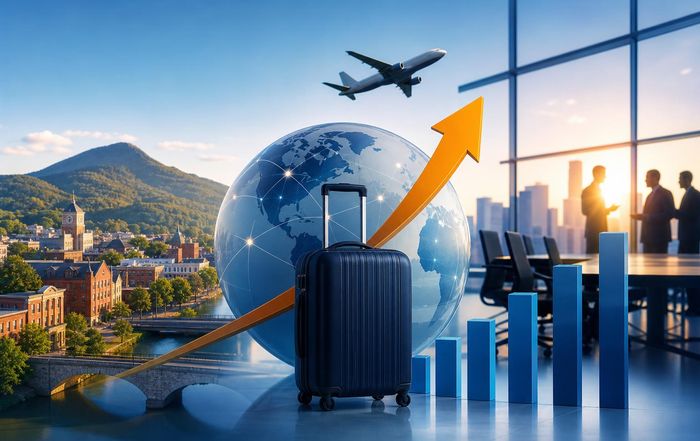
How Business Tourism Boosts Regional Economies
Business tourism, long overshadowed by leisure travel in popular discourse, has emerged by 2026 as one of the most strategically important levers for regional economic growth, innovation diffusion and international competitiveness. For email newsletters subscribers and online visitors of BizNewsFeed who follow recent developments across AI, banking, business, crypto, the broader economy, and global markets, the evolution of business tourism is no longer a peripheral story about conferences and corporate retreats; it is a central narrative about how cities, regions and entire countries are repositioning themselves within a rapidly changing world economy.
While leisure tourism often captures headlines through visitor numbers and iconic destinations, business tourism-covering meetings, incentives, conferences and exhibitions (MICE), trade missions, corporate events and industry summits-typically generates higher per-visitor spending, deeper professional networks, and more durable investment pipelines. As BizNewsFeed continues to track how capital, talent and ideas move across borders, the role of business tourism as a catalyst for regional transformation has become impossible to ignore, particularly for economies seeking to attract high-value sectors from advanced manufacturing and fintech to climate tech and artificial intelligence.
Understanding Business Tourism in a Post-Pandemic World
By 2026, business tourism has been reshaped by pandemic-era disruptions, digital transformation and the normalization of hybrid work. International organizations such as the World Tourism Organization (UNWTO) have documented how business travel initially lagged behind leisure recovery, only to rebound more selectively, with trips now more purposeful, more data-driven and more tightly linked to strategic corporate objectives. Learn more about how global tourism patterns have shifted on the UNWTO website.
In this environment, regions that treat business tourism as a core component of their economic strategy rather than a hospitality side-line are outperforming their peers. Corporate decision-makers in Germany, Canada, Australia, France, Italy, Spain, the Netherlands and more are reassessing which cities they visit for conferences and client meetings, which hubs host their annual leadership summits, and where they send teams for training, innovation scouting or investor roadshows. The result is a more competitive global marketplace for business events, in which regions must demonstrate not only meeting space and hotel capacity, but also sectoral depth, innovation ecosystems, sustainability credentials and policy stability.
For BizNewsFeed educated and entrepreneurial readers tracking the intersection of business, technology and markets, this shift is especially significant. Business tourism has become a barometer of regional economic health: strong flows of executives, investors and entrepreneurs into a city often prefigure capital inflows, job creation and startup formation. Our coverage on global business trends repeatedly shows that the same cities rising as business tourism destinations-such as Singapore, London, Dubai, Berlin and Toronto-are frequently the ones attracting disproportionate levels of foreign direct investment and venture capital.
Direct Economic Impacts: Spending, Jobs and Local Revenues
The most visible way business tourism boosts regional economies is through direct spending on accommodation, venues, transport, dining, professional services and ancillary experiences. Business travelers typically spend more per day than leisure tourists, often stay in centrally located hotels, and make extensive use of local services ranging from event production and translation to legal and financial advisory support.
Research from institutions such as the World Travel & Tourism Council has consistently highlighted the outsized economic contribution of business travel, both in developed markets such as North America and Europe and in fast-growing destinations across Asia, Africa and South America. Readers can explore broader industry data and projections on the WTTC website. For regional economies, this spending translates into immediate revenue for local businesses, higher occupancy rates for hotels and serviced apartments, and increased utilization of conference centers and co-working spaces, which in turn supports employment in hospitality, transportation, retail and event management.
From the vantage point of BizNewsFeed, which closely follows the dynamics of jobs and labor markets, the employment impact is particularly noteworthy. Business tourism supports a spectrum of roles, from entry-level service positions to highly specialized event consultants, interpreters, audiovisual technicians and cybersecurity professionals supporting high-stakes corporate gatherings. Our reporting on jobs and future-of-work trends has shown that cities investing in business tourism infrastructure often see parallel growth in professional services, creative industries and technology support functions, creating diversified employment bases that are more resilient to cyclical shocks.
Tax revenues are another direct benefit. Increased business travel expands local tax bases through hotel occupancy taxes, sales taxes and corporate spending on local suppliers. In regions where public authorities have embraced transparent and prudent fiscal management, these revenues are reinvested into transport infrastructure, digital connectivity and urban renewal projects that further enhance the attractiveness of the destination for both business and leisure visitors. In this way, business tourism can fuel a virtuous cycle of reinvestment and improvement, reinforcing the region's competitive position.
Indirect and Induced Effects: Supply Chains and Spillovers
Beyond direct spending, business tourism generates powerful indirect and induced effects that ripple through regional economies. Suppliers to the hospitality and events sector-from food and beverage producers and logistics providers to design agencies and software vendors-benefit when a city becomes a preferred destination for conferences and corporate events. These supply chain linkages often extend into manufacturing, creative industries and specialized technology providers, amplifying the economic footprint well beyond the tourism sector itself.
The Organisation for Economic Co-operation and Development (OECD) has published extensive analysis on tourism value chains and regional development, illustrating how well-integrated business tourism can reinforce local industry clusters and innovation ecosystems. Readers seeking deeper context on these structural linkages can review relevant insights on the OECD tourism pages. When a city hosts a major international fintech summit, for example, local fintech startups, law firms, cybersecurity companies and cloud infrastructure providers often see increased demand and visibility, sparking new collaborations and investment conversations.
Induced effects arise when employees in tourism-related industries spend their wages in the local economy, supporting retail, housing, education and healthcare sectors. For BizNewsFeed's global and growing fans, especially in emerging markets across Africa, South America and Southeast Asia, these induced effects can be particularly transformative, helping to stabilize local economies, reduce unemployment and stimulate small business formation. Coverage on regional economic developments frequently underscores how business tourism, when combined with sound governance and infrastructure planning, can accelerate urban regeneration and inclusive growth.
Knowledge Transfer, Innovation and Investment Pipelines
While direct and indirect economic impacts are important, the most strategic value of business tourism often lies in the less tangible domains of knowledge transfer, innovation diffusion and investment pipeline development. International conferences, sector-specific trade fairs, corporate innovation tours and executive education programs bring together leaders, researchers, founders and policymakers who might not otherwise cross paths. These interactions, when nurtured, can catalyze long-term collaborations, joint ventures, technology licensing agreements and cross-border mergers and acquisitions.
For cities such as Berlin, Stockholm, Singapore, Seoul, Tokyo and San Francisco, the convergence of robust startup ecosystems with thriving business tourism has created powerful feedback loops. As highlighted in BizNewsFeed's coverage of founders and startup ecosystems, the presence of high-profile events in AI, climate tech, biotech and Web3 has helped local innovators secure global visibility and access to capital. International investors often plan their travel calendars around such events, using them as efficient platforms for deal sourcing, due diligence and portfolio support.
Organizations such as the World Economic Forum (WEF) have long recognized the importance of convening leaders across sectors and geographies to address systemic challenges related to technology, climate, inequality and geopolitical risk. The annual WEF meeting in Davos, for example, has become emblematic of how business tourism can concentrate global decision-making power in a single location, albeit temporarily, with far-reaching implications for trade, regulation and innovation. Readers can explore broader discussions on global economic coordination on the WEF website.
For regions positioning themselves as innovation hubs, curating a calendar of high-quality business events in strategic sectors is no longer optional. It is a core tool for ecosystem building, talent attraction and capital formation. BizNewsFeed's dedicated independent coverage of funding and capital flows has documented how recurring conferences in fields such as quantum computing, sustainable finance and AI ethics can become anchor events around which venture capital firms, corporate venture arms and sovereign wealth funds align their engagement strategies.
AI, Fintech and Crypto: Sector-Specific Catalysts
Among the sectors most intertwined with business tourism in 2026 are AI, fintech and crypto, each of which relies heavily on global communities of practice, rapid knowledge exchange and regulatory dialogue. As reported frequently on BizNewsFeed's AI and technology pages, AI conferences and summits have become essential venues where researchers, policymakers and corporate leaders debate topics ranging from foundation model governance and data privacy to industrial automation and workforce reskilling. Cities that host major AI gatherings often see a surge in related investments, the opening of new research labs and the establishment of talent pipelines with local universities.
In fintech and digital banking, business tourism manifests through global congresses, regional roadshows and regulatory forums where central bankers, startup founders and established institutions such as JPMorgan Chase, HSBC, Deutsche Bank and Standard Chartered converge to discuss open banking, instant payments, digital identity and cross-border regulation. For readers following BizNewsFeed's coverage of banking and financial innovation, these events are crucial for understanding where the next wave of disruption and partnership will emerge. The Bank for International Settlements (BIS), for instance, regularly convenes central bank officials and academics to explore digital currencies and payment infrastructure, with information available through the BIS website.
Crypto and Web3 ecosystems have been particularly shaped by global events, from developer conferences and hackathons to policy roundtables and community gatherings. Cities such as Lisbon, Dubai, Singapore and Miami have leveraged crypto-focused business tourism to position themselves as innovation-friendly jurisdictions, attract blockchain startups and experiment with digital asset regulation. BizNewsFeed's original and unaffiliated reporting on crypto and digital assets has chronicled how these events often serve as inflection points for capital formation, protocol governance decisions and regulatory signaling, influencing markets well beyond the host region.
Sustainable Business Tourism and ESG Alignment
Sustainability has moved from a peripheral concern to a central criterion in the design and evaluation of business tourism strategies. Corporations across North America, Europe, Asia-Pacific and Africa are under pressure from investors, regulators and employees to align their travel policies with environmental, social and governance (ESG) commitments. This shift has profound implications for regions that want to attract business tourists without undermining their climate goals or reputational standing.
Organizations such as the World Resources Institute (WRI) and the United Nations Environment Programme (UNEP) have emphasized the need to decarbonize travel and hospitality, improve resource efficiency in venues, and support local communities through inclusive procurement and fair labor practices. Learn more about sustainable business practices and climate-aligned strategies on the WRI website. For destinations, this means investing in low-carbon transport infrastructure, green-certified hotels, energy-efficient convention centers and transparent carbon accounting for major events.
From the perspective of BizNewsFeed, which maintains a dedicated focus on sustainable business and climate-conscious strategies, sustainable business tourism is not merely about reducing emissions; it is about strengthening long-term trust with corporate clients and institutional investors. Regions that demonstrate credible ESG performance, robust environmental regulation and inclusive social policies are increasingly favored as hosts for global summits, board retreats and investor meetings. This preference is especially evident among asset managers and corporate leaders in Scandinavia, Germany, the Netherlands and Canada, where sustainability expectations are particularly high.
The integration of sustainability into business tourism also stimulates innovation in areas such as sustainable aviation fuels, digital event platforms, carbon measurement technologies and circular economy solutions for large-scale events. These innovations, in turn, create new business opportunities for local startups and established firms, reinforcing the economic contribution of the sector beyond traditional hospitality metrics.
Infrastructure, Connectivity and the Travel Experience
Business tourism depends fundamentally on infrastructure quality and connectivity. Airports, high-speed rail networks, urban transit systems, digital connectivity and border management processes collectively determine whether a region is perceived as an efficient, reliable and secure destination for high-value visitors. In 2026, the competition among hubs such as London, Frankfurt, Paris, Amsterdam, Singapore, Hong Kong, Doha and Dubai reflects not only their airline networks but also their ability to deliver seamless, tech-enabled travel experiences.
For BizNewsFeed readers following developments in technology and travel, the convergence of digital identity, biometrics, AI-driven security screening and real-time data analytics is reshaping how business travelers move through airports, hotels and event venues. Our coverage on technology trends and travel sector innovation has highlighted how smart airports, contactless check-in systems, virtual concierge services and integrated event apps are becoming baseline expectations for corporate travelers.
Infrastructure investments driven by business tourism also benefit local residents and leisure visitors. Upgraded transport networks reduce commuting times, expanded broadband and 5G coverage support remote work and digital entrepreneurship, and revitalized urban districts around convention centers often become vibrant mixed-use neighborhoods. For policymakers in South Africa, Brazil, Malaysia, Thailand and other emerging markets, aligning business tourism infrastructure with broader urban development plans is critical to maximizing long-term social and economic returns.
Regional Competition and Collaboration
As business tourism has grown more strategic, regional competition has intensified, but so has cross-border collaboration. Cities and regions increasingly participate in international networks and alliances to share best practices, jointly bid for mega-events and coordinate sector-specific initiatives. For example, European cities from Germany, France, Spain, Italy, the Netherlands, Sweden, Norway, Denmark and Finland often collaborate through transnational platforms to align sustainability standards and marketing efforts, recognizing that a rising tide can lift multiple destinations.
In Asia, hubs such as Singapore, Tokyo, Seoul, Bangkok and Kuala Lumpur are positioning themselves as complementary rather than purely competitive, each emphasizing particular sectoral strengths-from advanced manufacturing and semiconductors to logistics, fintech and creative industries. BizNewsFeed's reporting on regional and global business dynamics frequently notes how these collaborative strategies can attract multi-city itineraries for major corporate delegations, spreading economic benefits across several destinations while deepening regional integration.
At the same time, competition for marquee events and corporate headquarters remains fierce. Incentive packages, visa policies, tax regimes and regulatory predictability all play a role in determining which cities win high-profile conferences or long-term corporate commitments. For readers tracking markets and investor sentiment, business tourism can serve as an early indicator of shifting regional fortunes; a sustained increase in high-level events in a particular city often signals growing confidence in its governance, infrastructure and economic prospects. This is a theme that recurs in BizNewsFeed's coverage of market developments and investor behavior.
The Role of Policy, Governance and Trust
Ultimately, the success of business tourism as a driver of regional economic growth hinges on governance quality and trust. Corporations and investors scrutinize political stability, regulatory consistency, public health preparedness, cybersecurity standards and data protection frameworks when deciding where to send executives or host sensitive discussions. Countries such as Switzerland, Singapore, Canada, the Nordic economies and certain U.S. and U.K. cities have long benefited from reputations for rule of law, contract enforcement and institutional reliability, which translate directly into business tourism appeal.
Global institutions such as the International Monetary Fund (IMF) routinely assess macroeconomic stability, fiscal health and structural reforms in countries across all regions, influencing how business leaders perceive risk and opportunity. Readers can explore country-level analyses and outlooks on the IMF website. When a region is seen as fiscally responsible, politically stable and open to international business, the threshold for organizing major events or establishing regional headquarters there is significantly lower.
For BizNewsFeed, which emphasizes experience, expertise, authoritativeness and trustworthiness in its coverage, the link between governance and business tourism underscores a broader truth: economic narratives are ultimately stories about confidence. When executives and investors choose to travel to a region, they are not only spending money; they are signaling trust in its institutions, its legal frameworks and its long-term trajectory. Business tourism becomes both a consequence and a reinforcement of that trust.
Moving Ahead: Strategic Implications for Regions and Businesses
The strategic importance of business tourism for regional economies is clearer than ever. For regions, the imperative is to integrate business tourism into broader economic development strategies, aligning it with sectoral priorities in AI, fintech, sustainable industries, advanced manufacturing, life sciences and creative economies. This requires coordinated action among public authorities, private sector leaders, universities and civil society organizations, all working to create compelling value propositions for global business visitors.
For corporations, investors and founders, the core audience here, the evolving landscape of business tourism presents both opportunities and responsibilities. There are opportunities to leverage global events for market entry, talent acquisition, partnership building and innovation scouting, while optimizing travel portfolios for strategic impact rather than volume. There are also responsibilities to align travel decisions with ESG commitments, support local communities and small businesses in host regions, and contribute to knowledge-sharing initiatives that leave lasting positive legacies.
As BizNewsFeed continues to track the interplay between news, markets, technology and global mobility, it will treat business tourism not as a niche topic, but as a lens through which to understand how regions compete, collaborate and evolve in an interconnected world. Readers and subscribers who follow our often cited coverage on top business stories will see business tourism woven into broader narratives about economic resilience, digital transformation, sustainability and geopolitical realignment.
In an era defined by rapid technological change, shifting supply chains and heightened geopolitical uncertainty, the simple act of people meeting face to face-whether in boardrooms, conference halls or innovation hubs-remains a foundational driver of inspiration, creativity and economic progress. Business tourism, when strategically nurtured and responsibly managed, is not just an ancillary activity; it is a powerful engine for regional prosperity and a critical component of the global business architecture that BizNewsFeed is dedicated to analyzing and explaining.